
Troubling Signs for Interest Rates after Fed Cut
Troubling Signs for Interest Rates after Fed Cut
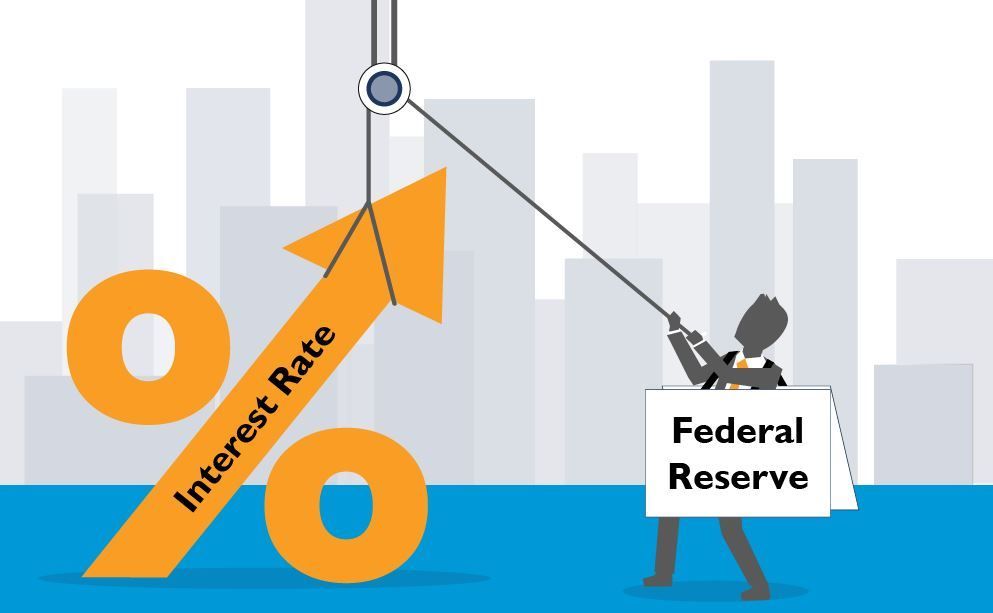
All eyes were on the September 2025 Fed meeting as the financial industry forecasted a rate cut, with other cuts to follow. There is an assumption that the Fed’s rate cuts will directly correlate with a reduction in investor and consumer rates. This assumption is not necessarily true. There are interest rate cycles that align with Fed activity and other cycles that move contrary to Fed activity. These contrary moves between the Fed’s rate directions and bond and mortgage rates are defined as market divergences (opposing movements between markets).
Many remember what occurred during the credit crisis that caused a long-lasting, downward interest rate cycle from 2007 to 2021, where Fed, Treasury, and mortgage rates all moved lower. Later in 2021, we saw subtle divergences come into play, where movements between bond rates and mortgage rates moved higher, contrary to the Fed’s movement of lower to unchanged.
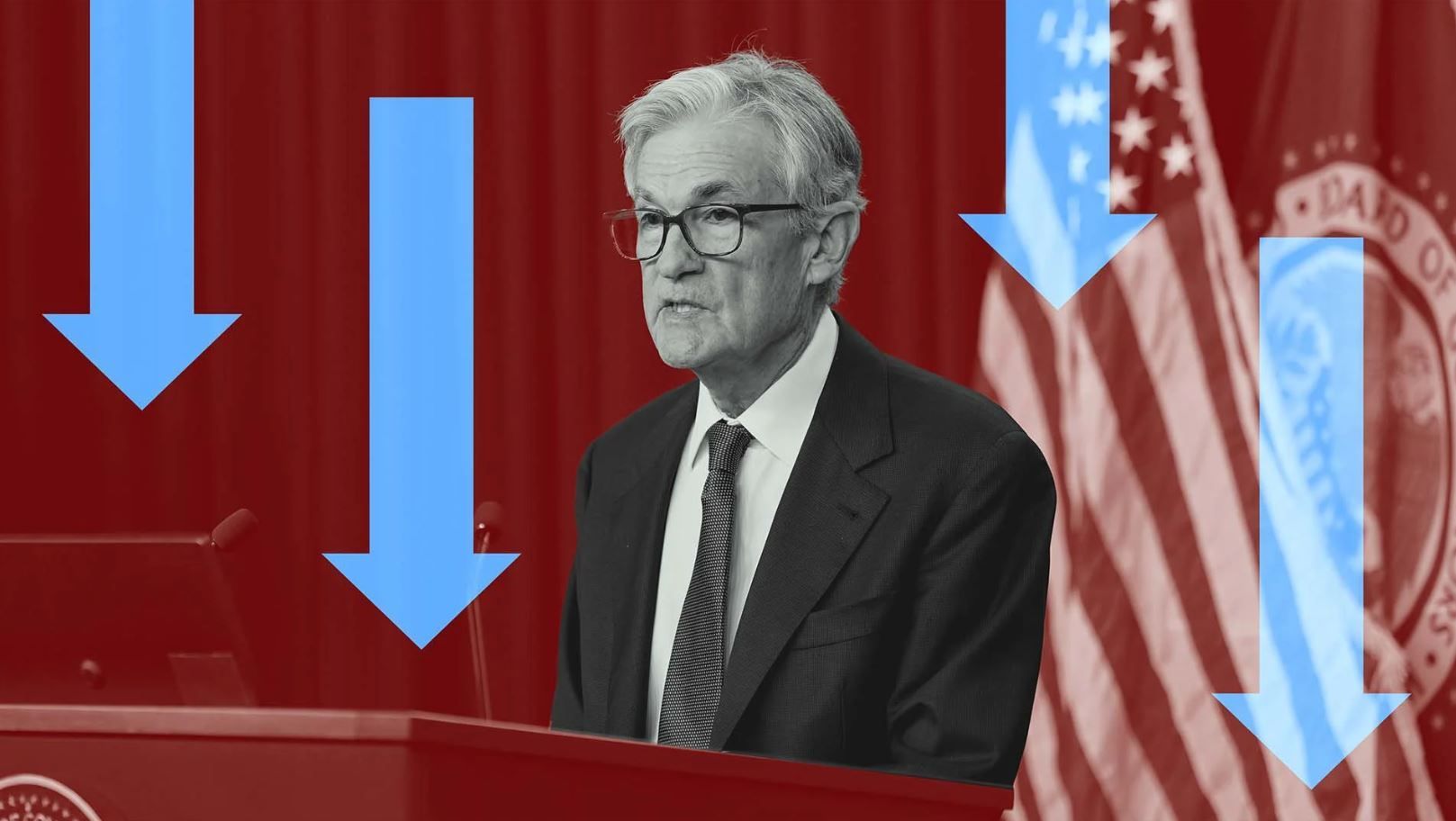
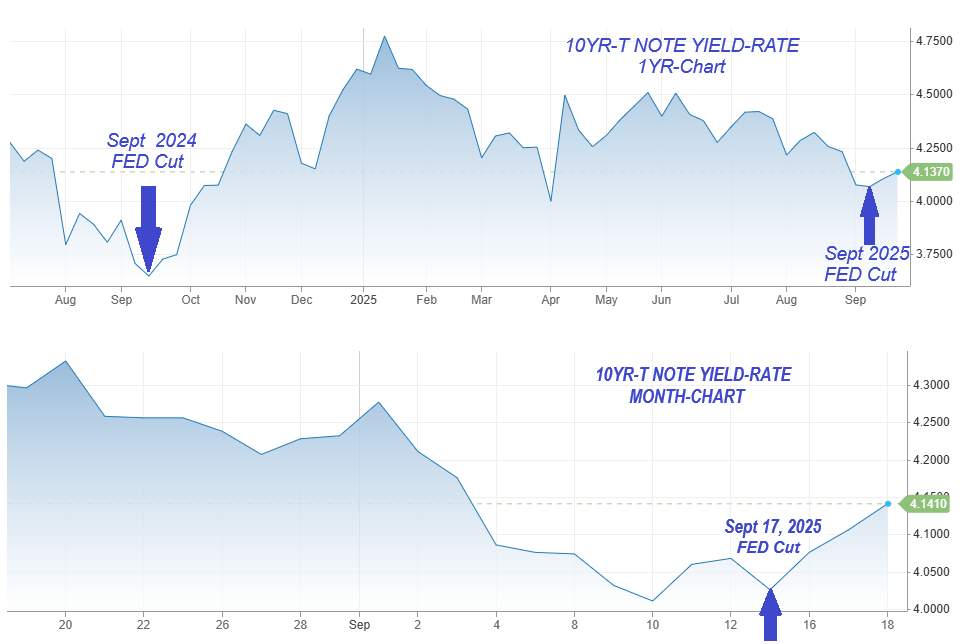
In the September 17,2025 the Fed cut rates by 0.25%, as expected. The benchmark 10-year Treasury note yield temporarily dipped, testing the 4.00%. Afterward, the 10-year T-note gave back its improvement and ended the day higher, with its yield closing at 4.07%. See Charts
Technical Matters*
There was nothing constructive for the 10-year T-note futures price that occurred after the Fed rate cut announcement. T-note futures prices failed to break out into new highs, and the market characteristic indicator gave a negative reading (higher yield/rate pressure), which came from the divergence in Treasury yields moving higher after the Fed cut.
History of Divergences
Recent History
One year ago, T-notes were clearly out of vogue with the Fed funds rate direction. In September 2024, the T-note yield dropped to 3.60%. Immediately following the Fed funds rate cut announcement of 0.50%, the note yields increased and continued to increase to 4.45% by mid-November 2024 before any correction. See Charts
Long Term History
Divergences between Fed cuts and the Treasury market are important and can be significant. In 1986, the 30-year Treasury was followed as the benchmark for long-term rates, and the Fed discount rate was followed by active traders. There was a consistent divergence between Fed cuts and a rise in yields before the 30-year bond market had a noteworthy sell-off in prices, creating a sharp increase in yields/rates.
Conclusion
History has taught us to take notice of divergences (opposing market directions) between Treasury yields/rates and Fed rates. Because the bond market has remained an important indicator for investor and mortgage rates, it is important to respect what the market is telling us. The higher rate behavior of the bond and mortgage markets is a troubling sign after a Fed cut.
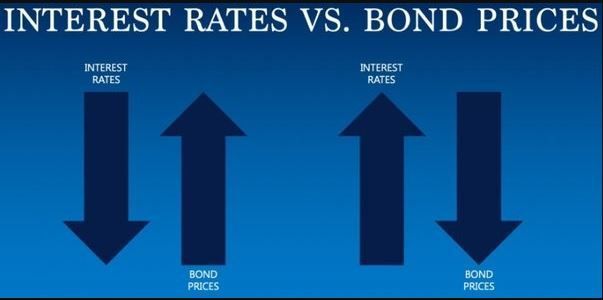
*T-note prices move opposite to rates/yields. Falling Note prices mean higher rates